neuroo.
Private operational intelligenceNEUROO / 2026

Neuroo connects financial, operational and business information in a shared model. Investigate events, anticipate deviations and support decisions with a language model deployed within your company’s infrastructure.

01 — Signal core
Two signals. One meaning.
Follow the signal

Early access program. Each implementation starts with a business case, an infrastructure review and acceptance criteria agreed with the client.

The problem———The cost of operating with fragmented information

A bank balance, an outstanding invoice and a purchase order describe different parts of the same financial exposure. Reviewed separately, they produce reports that may be accurate in context but insufficient to explain the whole operation.

Reconciliation then moves into spreadsheets, email exchanges and individual expertise. Teams spend hours explaining differences, checking versions and preparing answers that become outdated with the next transaction.

Neuroo provides a shared foundation for that investigation: connect the source records, retain their context and support questions across business functions. The value lies in closing the distance between an operational signal, its explanation and a decision that can be reviewed.

An executive desk at night: printed reports, a spreadsheet and chat messages, each with a different version of the company.
Every system tells one part. The full picture gets assembled by hand, late.
One decision, end to end———From the question to the evidence

Consider a liquidity review. Management needs to understand the exposure, examine its causes and decide what to do. This walkthrough illustrates how Neuroo organizes that investigation; it does not represent client data or a live operation.

01 / 04

Define the question

Before calculating, establish the decision. Period, entities, currency and source availability affect what a financial position means. Context belongs in the query, rather than in a clarification after the answer.

  • Explicit scope and reporting cutoff
  • The requester’s permissions applied
NEUROO / 01Illustrative scenario

Management query

Which commitments put pressure on liquidity over the next four weeks?

Horizon

Four weeks from the agreed reporting cutoff

Scope

Authorized entities and accounts

Owner

Finance leadership

The question retains the context of the decision.

02 / 04

Connect the records

The shared model links balances, receivables and obligations. Relationships between entities distinguish an issued invoice from a received payment, and a purchasing commitment from a payment already made.

  • Source and currency of each record
  • Identifiable reconciliation differences
NEUROO / 02Illustrative scenario

Sources for the investigation

The same operation, connected across systems.

Banking

Confirmed balances and transactions

ERP

Obligations and payment due dates

Collections

Outstanding documents and payment commitments

The original source remains available for verification.

03 / 04

Expose evidence and assumptions

The answer should separate observed facts from estimates. If a receipt date is uncertain or a source is outdated, that condition should accompany the conclusion. Uncertainty belongs in the analysis, rather than behind a seemingly precise number.

  • References that support review
  • Visible assumptions and missing data
NEUROO / 03Illustrative scenario

Answer criteria

Facts, estimates and open questions, separately.

Confirmed

Available funds reported by banking sources

Estimated

Receipts subject to treasury assumptions

To verify

Differences and unreconciled documents

Fluent language does not replace evidence.

04 / 04

Act with accountability

A finding may lead to an alert, a review or a scheduled report. The company defines thresholds, recipients and approvals. When an action changes a source system, human authorization remains part of the process.

  • Defined owner and approval
  • A record of the query and action
NEUROO / 04Illustrative scenario

The next decision

From a finding to an authorized intervention.

Output

Review of commitments with treasury

Control

Approval before executing changes

Record

Associated evidence and accountable owner

Authority remains with the organization.

NEUROO / 01Illustrative scenario

Management query

Which commitments put pressure on liquidity over the next four weeks?

Horizon

Four weeks from the agreed reporting cutoff

Scope

Authorized entities and accounts

Owner

Finance leadership

The question retains the context of the decision.

Capabilities———Four domains, one model

Scope is organized around decisions, available sources and accountable owners. Each domain provides context for the others: a sale affects collections; collections shape liquidity; inventory availability influences delivery and margin.

Liquidity · Reconciliation · Exposure

Finance

  • Connect bank transactions, invoicing and accounting records to investigate discrepancies and open items.
  • Examine payment obligations and expected receipts against the assumptions and horizons set by treasury.
  • Identify spending variations or concentrated maturities that warrant management review.
See an example
Example · Finance

Which commitments put pressure on next month’s liquidity? The answer should distinguish confirmed balances, estimated receipts and recorded obligations, with sources supporting each conclusion. A projection without those assumptions is not enough to support a decision.

Availability · Production · Delivery

Operations

  • Compare stock, committed demand and open orders by operating unit.
  • Investigate delays using production, procurement and historical supplier performance.
  • Connect delivery incidents to affected customers, products and commercial commitments.
See an example
Example · Operations

Which orders are at risk of late delivery, and why? The investigation connects the customer commitment to inventory, purchase orders and recorded capacity. Operations can then examine the cause and prioritize an intervention in context.

Profitability · Accounts · Customer relationships

Commercial

  • Examine product and customer profitability using sales, costs and payment behavior.
  • Identify changes in purchase frequency, volume or mix that warrant an account review.
  • Evaluate opportunities against the available history and make forecast limitations explicit.
See an example
Example · Commercial

Which accounts increase sales while tying up more working capital? Connecting margin, credit terms and collections helps management assess the quality of growth as well as its volume. The interpretation can be checked against the underlying records.

Labor cost · Continuity · Obligations

People

  • Consolidate labor cost components by function, including recorded overtime and absence.
  • Review turnover and coverage trends at the level of detail authorized for each manager.
  • Track approaching deadlines and obligations with accountable owners and reference dates.
See an example
Example · People

What explains a change in a department’s labor cost? The analysis should separate headcount, compensation, overtime and absence. Personal information retains its access restrictions; a cross-functional query does not remove those boundaries.

How it works———From source systems to a decision you can review

01 · Connect · scroll to advance
00%
Drag to rotate · the cursor tilts the scene
01ConnectIntegrate authorized ERP, CRM, banking, payroll and operational sources through the interfaces available in each environment.Each source delivers a signal to the neuron. The integration defines which records are read, how often, and how interruptions or incomplete updates are detected.Compatibility is validated by platform, version and permissions. The source map distinguishes available connectors, required adaptations and project dependencies.02UnifyOrganize entities, relationships and business rules in a common model while preserving references to the original records.Customers, invoices, payments and orders become connected records. Normalization supports investigation across departments, with explicit rules for resolving duplicates and differences.The model retains context and freshness. This foundation allows teams to check answers against supporting data and maintain shared business definitions.03ReasonA private language model interprets the question, relates information across domains and presents an answer supported by evidence.The analysis distinguishes confirmed records, estimates and missing information. When sources cannot support a conclusion, that limitation must accompany the answer.The model runs on your own infrastructure or a private cloud. Capacity and access rules are defined according to volume, concurrency and project scope.04ActTurn a finding into an answered question, an alert or a report, with defined owners and conditions for action.Management establishes thresholds, recipients and channels. A useful alert needs context, a clear priority and a person responsible for reviewing it.Actions that modify source systems require human approval. Scope, authorization and supporting evidence must remain associated with the intervention.05GovernApply permissions by person and department, preserve traceability and keep processing within the environment agreed with the client.Every query operates within an authorized scope. Recording who asked, which information was used and what action followed supports review and incident investigation.Technology, security and business teams define access, retention and operating policies. These controls are validated before adding sources or expanding access.

Each source delivers a signal to the neuron. The integration defines which records are read, how often, and how interruptions or incomplete updates are detected.

Compatibility is validated by platform, version and permissions. The source map distinguishes available connectors, required adaptations and project dependencies.

Control———Closed by design

Infrastructure, permissions and traceability are architectural decisions. Neuroo is designed to operate within the client’s environment, with a private language model and access rules set by the organization. Scope is reviewed with technology, security and business owners.

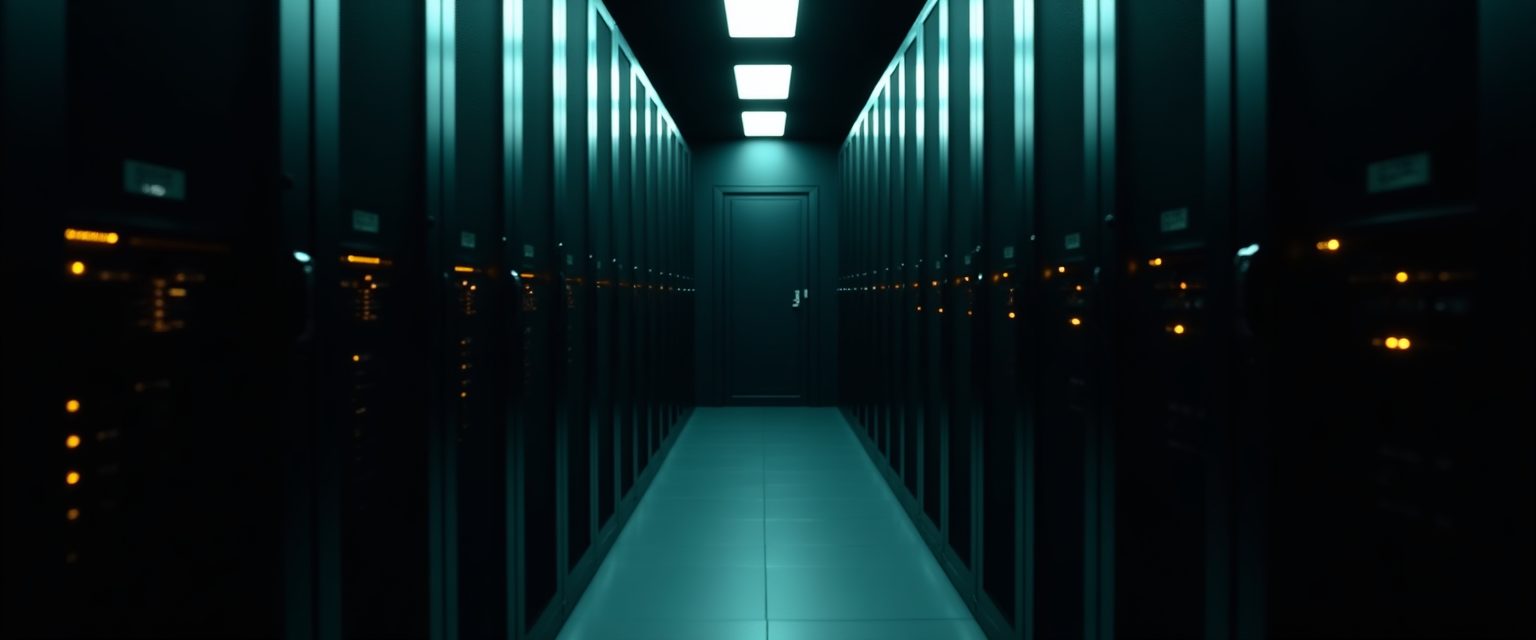
A private data-centre corridor with dark racks and a closed door at the end.
The infrastructure belongs to the client. Model, compute and data never leave it.

Infrastructure controlled by the client

Deployment on company servers or private cloud. Sizing considers data volume, update frequency and concurrency, and is validated as part of the project.

Defined use of information

Operational data is not used to train external models. Access, retention and processing must be defined in the implementation architecture.

Traceability for review

Connecting queries, sources and actions supports investigation of how an answer was produced. The activity log is part of operational control and incident review.

Permissions tied to responsibility

The scope of a query depends on the authorized person and function. Unifying the data model does not mean giving every user access to all information.

audit log · demo · internal network● live
09:12:00source banking/api · 1,240 movements received
09:15:17source erp · 318 invoices · 42 purchase orders
09:18:34reconciliation complete · difference 0.00
Implementation———A verifiable scope before expansion

A useful project defines what it needs to demonstrate, which data it needs and who will validate it. The implementation proposal is built around a priority use case and the actual conditions of your operation.

01

Discovery and scope

Review the target decision, accountable owners, systems and access restrictions. Agree on reference questions and criteria for assessing whether the outcome is useful.

Stage outcome

A defined use case and acceptance criteria.

02

Integration design

Validate interfaces, data quality, read permissions and update frequency. Size the private environment and document dependencies before committing to deployment.

Stage outcome

A source map, infrastructure requirements and responsibilities.

03

Validation with users

Compare answers with known records, review references and test access boundaries. Involve the people who understand the operation to identify incorrect interpretations and insufficient data.

Stage outcome

Verified findings and documented adjustment decisions.

04

Operation and evolution

Define monitoring, incident ownership and conditions for adding sources. Expand from a validated operational foundation, with changes subject to review.

Stage outcome

An operating plan and priorities for further development.

Evaluation criteria

A commercial discussion should clarify scope, dependencies and responsibilities. These questions provide a foundation for evaluating Neuroo.

01

Which organizations are the strongest fit for Neuroo?

Organizations where an important decision depends on several sources, information requires confidentiality controls and an accountable owner can validate the results. The initial scope should address an identifiable operational need; company size alone does not determine fit.

02

Do we need to replace our ERP, CRM or analytics tools?

The approach works with existing systems. They retain their role in recording transactions and running operations. Neuroo adds relationships, queries and monitoring over authorized sources. The specific integration depends on available interfaces and permissions.

03

How do you determine which systems can be connected?

The review covers product, version, interfaces, data schema, licenses and access restrictions. ERP, CRM, banking and structured-file integrations must be validated for each project; naming a platform does not guarantee compatibility with every configuration.

04

What happens when information is incomplete?

Missing data, outdated sources and differences between systems affect an answer. These conditions should be identified during validation and made explicit during operational use. Acceptance criteria include how a limitation is presented and when a human review is required.

05

Does Neuroo make decisions or change systems on its own?

The organization defines the scope of queries, alerts and actions. The design includes human approval for changes to source systems. Evaluation establishes what may be executed, who authorizes it and which evidence is retained.

06

What infrastructure is required?

Deployment is planned on company infrastructure or private cloud. Compute, storage and operating requirements depend on sources, volume, update frequency and concurrent users. Sizing follows discovery, rather than a universal configuration.

07

How are cost and timing established?

The proposal accounts for integrations, data preparation, infrastructure, functional scope and support. Cost and schedule are based on that scope, with explicit responsibilities and deliverables. This early access stage is not presented as a self-service subscription.

08

What does the first conversation cover?

The decision that currently requires the most effort, the sources behind it, the people using the information and the intended deployment environment. These inputs help assess fit and identify what requires technical validation before proceeding.


Early access———Limited deployments in 2026

Describe the process you want to review and the systems involved. The first conversation focuses on the business case, information restrictions and implementation conditions. These inputs help our team assess fit and propose an initial scope.